nduja.store is the world's first comparison engine dedicated entirely to 'nduja — the fiery, spreadable Calabrian salami that's taken the food world by storm. We compare prices, stock levels, and quality across local Italian delis, artisan producers, online specialists, and marketplaces to help you find the best 'nduja wherever you are. Currently covering 20 cities across the United Kingdom, with Italy, the United States, UAE, and Australia coming soon.
Three Ways to Buy 'Nduja
Local Shops & Delis
Italian delicatessens, specialist food shops, and charcuterie counters near you. We show real prices per 100g, stock status, Google ratings, and directions.
Online Specialists
Artisan food stores like Sous Chef, Natoora, and Diforti that deliver authentic 'nduja to your door. We compare price per 100g, delivery cost, and total delivered price.
Amazon & Supermarkets
Marketplace and supermarket options when you need 'nduja quickly. We include these for convenience, though specialist sources typically offer better quality and value.
What is 'Nduja?
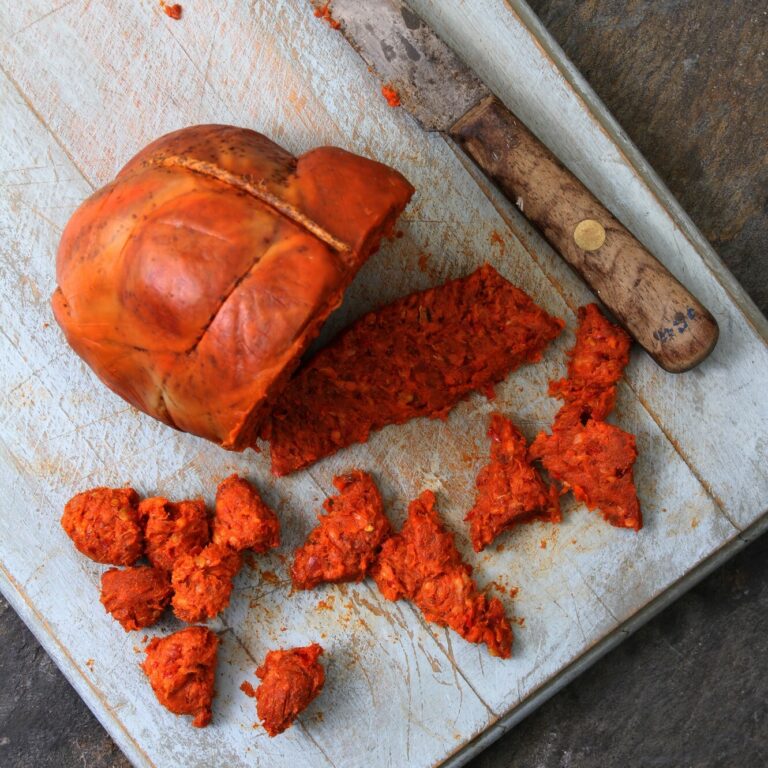
'Nduja (pronounced en-DOO-ya) is a spicy, spreadable pork salami from the small hilltop town of Spilinga in Calabria, southern Italy. Made with pork, fiery Calabrian chilli peppers, and salt, it has a rich, smoky flavour and a uniquely soft, spreadable texture that melts when heated.
Unlike traditional salami, 'nduja doesn't need slicing — it's spreadable straight from the jar or casing. The high proportion of Calabrian peperoncino (typically 25-30% of the mix) gives it a deep red colour and an intense, slow-building heat that's become hugely popular in modern cooking.
In the kitchen, 'nduja is remarkably versatile. Spread it on crusty bread or bruschetta as a starter, stir it into pasta sauces for instant depth and spice, dot it across pizza before baking, fold it into risotto, or melt it into butter for a fiery finishing sauce. A little goes a long way.
The History of 'Nduja
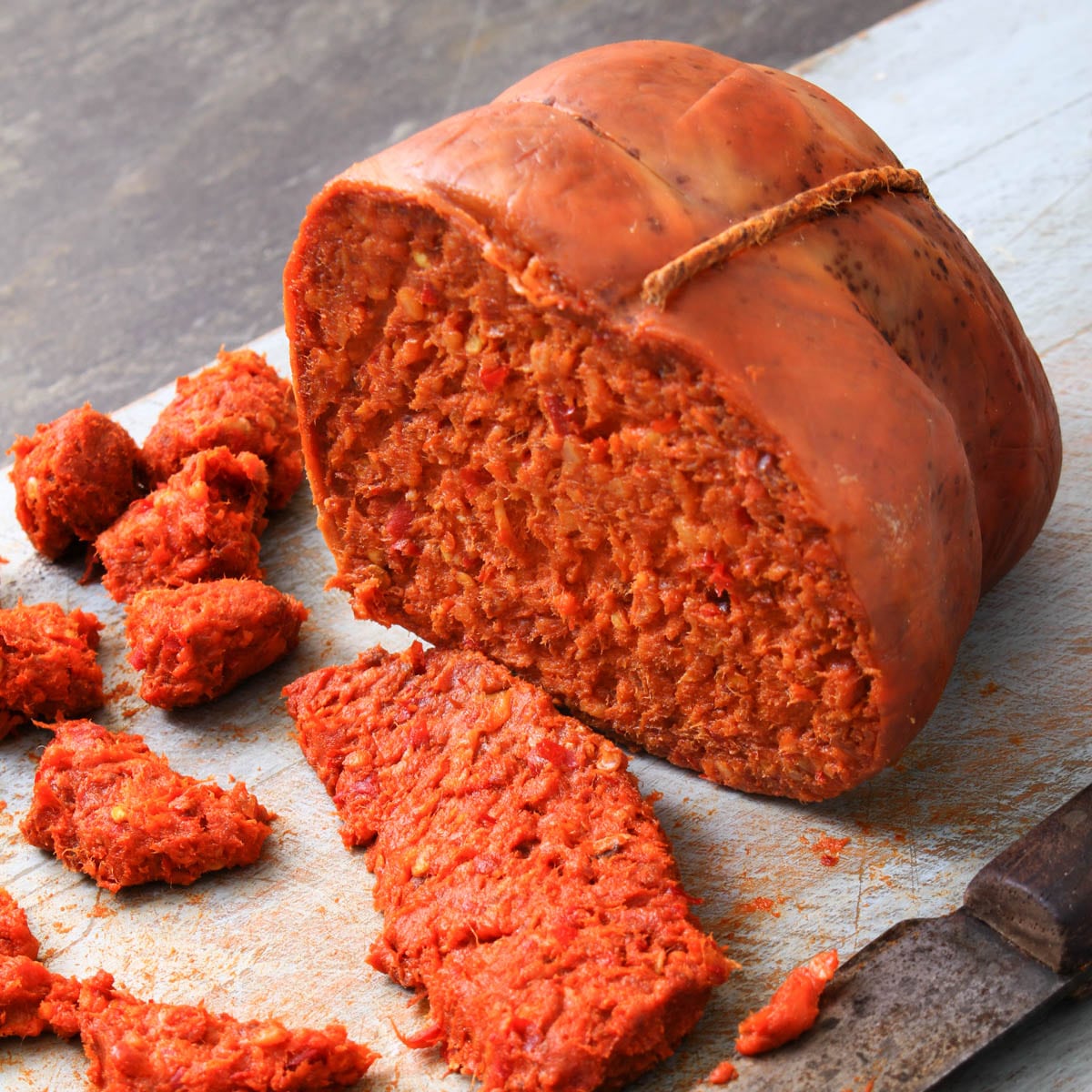
'Nduja originates from the small hilltop town of Spilinga in Calabria, the toe of Italy's boot. While the exact origins are debated, most food historians trace it to the 17th or 18th century, when Calabrian peasants needed ways to preserve pork through the winter months.
The name likely derives from the French andouille — a type of sausage introduced during the Napoleonic period when French troops occupied Southern Italy. The Calabrians adapted the concept, adding their signature ingredient: the fiery peperoncino calabrese, a local chilli pepper that gives 'nduja its distinctive red colour and slow-building heat.
For centuries, 'nduja remained a purely local product, made by families for their own consumption. It was only in the 1990s and 2000s that it began appearing in restaurants outside Calabria. By 2010, it had reached London and New York, and by 2020 it had become a global food trend — appearing on pizzas, in pasta sauces, and on charcuterie boards from Tokyo to Toronto.
Today, Spilinga holds an annual Sagra della 'Nduja festival every August, celebrating the product that put this small town on the world food map. The best 'nduja is still made there, using traditional methods passed down through generations.
How 'Nduja is Made
1. The Meat
Traditional 'nduja uses fatty cuts of pork — belly, jowl, and shoulder — finely minced together. The high fat content (typically 40-50%) is essential: it's what makes 'nduja spreadable and gives it that melting quality when heated. Quality producers use heritage breed pigs raised in Calabria.
2. The Chilli
Calabrian peperoncino makes up 25-30% of the total weight — an enormous amount. The chillies are dried and ground before being mixed with the pork. This high proportion gives 'nduja its signature deep red colour and builds a heat that's intense but not aggressive, with fruity, slightly smoky undertones.
3. The Curing
The mixture is stuffed into natural pork casings and cold-smoked over aromatic wood (often olive or acacia) for several days. It's then hung to cure in cool, ventilated rooms for anywhere from a few weeks to several months. Longer curing produces a firmer, more complex 'nduja.
4. The Result
The finished product is a soft, spreadable salami with a vibrant red-orange colour, an intense smoky-spicy aroma, and a rich, savoury flavour that builds in heat. Unlike most cured meats, 'nduja gets better when heated — the fat melts and carries the chilli and smoke flavours across the palate.
'Nduja Nutrition Facts
'Nduja is a calorie-dense, flavour-dense product — a little goes a long way. A typical 30g serving (enough for two slices of toast) contains approximately 90-110 calories, 8-10g of fat, and 3-4g of protein. It's naturally gluten-free, lactose-free, and contains no artificial additives when authentically made.
Calabrian chilli peppers are rich in capsaicin, which has been associated with anti-inflammatory properties and may support metabolism. The fermentation process also creates beneficial bacteria, similar to other cured meats.
While 'nduja is not a health food per se, its intense flavour means you need very little to transform a dish — making it a more flavourful alternative to adding butter, cream, or other fats to pasta, vegetables, and grilled meats.
How to Choose Good 'Nduja
Check the Ingredients
Authentic 'nduja should contain just three things: pork, Calabrian chilli peppers, and salt. Some producers add a small amount of olive oil. Avoid anything with preservatives, colourings, or a long ingredients list — it's a sign of an industrial product rather than artisan craftsmanship.
Look for Spilinga Origin
The best 'nduja comes from Spilinga in Calabria, where the tradition originated. Look for "'Nduja di Spilinga" on the label. While excellent 'nduja is now made elsewhere — including by British charcuterie producers — Spilinga remains the gold standard for flavour and authenticity.
Understand Pricing
Expect to pay £3–6 per 100g for authentic 'nduja. Supermarket versions (£2–3/100g) are often milder and less complex. Specialist deli and online prices (£4–6/100g) reflect better quality pork, proper Calabrian chillies, and traditional production methods. We show price per 100g across every listing to make comparison easy.
Jar vs Casing
'Nduja is sold in two formats: in a glass jar (pasteurised, longer shelf life, convenient) or in its traditional pork casing (often firmer, more intense flavour, shorter shelf life). Jars are ideal for home cooks; casing is preferred by purists and chefs. Both are excellent — it's a matter of preference.
Browse UK City Guides
Each city guide lists the best local shops, Italian delis, and online options for buying 'nduja. We include real prices, stock status, interactive maps, and sortable comparison tables so you can quickly find the best deal near you.
What to Make with 'Nduja
'Nduja Pasta
The classic. Fry a tablespoon of 'nduja in olive oil until it melts, add tinned tomatoes, and simmer for 10 minutes. Toss with rigatoni or paccheri and finish with torn basil and Parmesan. Feeds two in 15 minutes.
'Nduja Pizza
Dot small spoonfuls across your pizza in the last 2-3 minutes of baking — the heat melts it into fiery pools of flavour. Pairs beautifully with burrata, honey, or fresh rocket.
'Nduja on Toast
Spread on warm sourdough toast and top with honey for a sweet-heat contrast. Or go savoury with burrata, rocket, and a squeeze of lemon. The simplest starter that impresses.
'Nduja Butter
Mix equal parts soft butter and 'nduja, roll into a log, and chill. Slice rounds onto grilled steak, roast chicken, or baked potatoes. Make a batch and use it all week.
'Nduja Eggs
Fry a teaspoon of 'nduja in a pan until it melts into the oil, then crack in your eggs. The spicy, smoky fat bastes the whites as they cook. Finish with flaky salt and crusty bread.
'Nduja Roast Chicken
Loosen the skin on a whole chicken and spread 'nduja between the skin and breast. Roast as normal — the fat renders into the meat, creating the juiciest, spiciest roast you've ever had.
'Nduja Risotto
Stir a generous tablespoon into your risotto in the last few minutes of cooking. It melts into the rice, turning the whole dish a vibrant orange-red with a deep, warming spice. Finish with mascarpone.
'Nduja Vinaigrette
Whisk melted 'nduja with olive oil, red wine vinegar, and a pinch of honey. Drizzle over roasted vegetables, grilled halloumi, or a simple green salad for instant depth.
How to Store 'Nduja
Unopened Jar
Store in a cool, dry cupboard away from direct sunlight. Unopened jarred 'nduja has a shelf life of 6–12 months depending on the producer. Check the best-before date on the label.
Opened Jar
Once opened, keep refrigerated at 0–4°C. Use within 20–30 days. Pour a thin layer of olive oil over the surface to prevent drying and oxidation. Always use a clean spoon.
Natural Casing
'Nduja in its traditional casing should be stored in the fridge once cut. Wrap the cut end in cling film. Use within 2–3 weeks. The casing may develop harmless white mould — simply trim it off.
Freezing
'Nduja freezes well for up to 3 months. Portion into ice cube trays or wrap in cling film — frozen cubes can go straight into hot pans or sauces without thawing.
'Nduja vs Other Spreads
'Nduja vs Sobrasada
Both are spreadable cured pork, but from different traditions. 'Nduja (Calabria, Italy) uses raw Calabrian chilli peppers for intense, fruity heat. Sobrasada (Mallorca, Spain) uses pimentón (smoked paprika) for a milder, smokier, more buttery flavour. 'Nduja is typically spicier; sobrasada is richer and sweeter.
'Nduja vs Chorizo
Chorizo is a firm, sliceable sausage from Spain and Portugal, flavoured with smoked paprika and garlic. 'Nduja is soft and spreadable, with no garlic and much more chilli. Chorizo is eaten in slices; 'nduja melts into dishes. They're complementary, not substitutes.
'Nduja vs Harissa
Both deliver chilli heat, but they're very different products. Harissa is a North African chilli paste made from roasted peppers, spices, and olive oil — it's vegan and intensely spiced. 'Nduja is a pork product with a richer, meatier depth. Use harissa where you want heat without meat; 'nduja where you want both.
'Nduja vs Salami
Standard salami is firm, dry-cured, and sliced thin. 'Nduja is the exception — it's soft, spreadable, and melts when heated. The key difference is the high fat and chilli content. Think of 'nduja as salami's wilder, spicier, more versatile cousin. Both are cured pork, but they behave completely differently in the kitchen.
Frequently Asked Questions
Where can I buy 'nduja near me?
The best places to buy 'nduja are Italian delicatessens, specialist food shops, and artisan charcuterie counters. We list the best stockists in 20 cities (and growing), with real prices, stock availability, and map locations. Choose your city from our guides above to find your nearest option.
How much does 'nduja cost?
Authentic 'nduja typically costs between £3 and £6 per 100g, depending on where you buy it. Supermarket own-brand versions start around £2.50 for a 70g pot. Specialist Italian delis charge £4–5 per 100g for counter-sliced 'nduja. Online stores like Sous Chef sell 250g jars from around £9–10 including delivery. We show price per 100g on every listing so you can compare fairly.
Can you buy 'nduja in supermarkets?
In the UK, Tesco, Sainsbury's, and Waitrose all stock 'nduja in their chilled deli or world foods sections. Tesco Finest 'Nduja (70g, ~£2.50) and Waitrose's Italian range are the most widely available. However, supermarket versions tend to be milder and less complex than specialist products. For authentic Calabrian 'nduja, an Italian deli or online specialist will offer noticeably better quality.
How do you pronounce 'nduja?
It's pronounced en-DOO-ya (with the stress on the middle syllable). The apostrophe before the 'n' represents a dropped vowel in the Calabrian dialect. You'll also see it written as nduja, 'nduja, or nduja — they all refer to the same product.
How long does 'nduja last once opened?
Once opened, 'nduja in a jar should be kept refrigerated and used within 20–30 days. Cover the surface with a thin layer of olive oil to prevent drying out. 'Nduja in its natural casing keeps well in the fridge for 2–3 weeks once cut. Unopened, jarred 'nduja has a shelf life of 6–12 months stored in a cool, dry place.
Is 'nduja gluten-free?
Authentic 'nduja is naturally gluten-free and lactose-free, containing only pork, Calabrian chilli peppers, salt, and sometimes olive oil. However, always check the label — some budget or industrial products may contain additives. The products we list from Spilinga producers are typically allergen-free.
What's the difference between 'nduja and sobrasada?
Both are spreadable cured meat products, but they come from different traditions. 'Nduja is from Calabria, Italy, and gets its heat from Calabrian chilli peppers. Sobrasada is from Mallorca, Spain, and uses pimentón (smoked paprika) for a milder, smokier flavour. 'Nduja is typically spicier and more intensely flavoured, while sobrasada is richer and more buttery.
Can you eat 'nduja cold?
Technically yes, but 'nduja is best enjoyed warm. At room temperature it's quite firm and waxy; when gently heated, the fat melts and releases all the smoky, spicy aromatics. Spread it on hot toast, stir it into a warm sauce, or simply warm a spoonful in a pan for 30 seconds before serving.
What is 'nduja made from?
Authentic 'nduja contains just three ingredients: pork (fatty cuts like belly, jowl, and shoulder), Calabrian chilli peppers (25-30% of the mix), and salt. The mixture is cold-smoked over aromatic wood and cured for weeks to months. Quality 'nduja has no preservatives, colourings, or artificial additives — if the ingredient list is long, look elsewhere.
Can you freeze 'nduja?
Yes — 'nduja freezes well for up to 3 months. The best method is to portion it into ice cube trays or wrap small amounts in cling film. Frozen cubes can go straight into hot pans, sauces, or pasta without thawing. This is a great way to always have 'nduja to hand without waste.
Where does 'nduja come from?
'Nduja originates from Spilinga, a small hilltop town in Calabria, southern Italy. The tradition dates back to the 17th or 18th century, and the name likely derives from the French andouille. Spilinga still holds an annual Sagra della 'Nduja festival every August, celebrating the product that put this small town on the world food map.
Coming Soon to More Countries
Own a Shop?
Get listed for free and reach customers actively searching for 'nduja in your area. Upgrade to a featured listing for priority placement.
List Your ShopOnline Store?
Join our comparison table with affiliate tracking. We send high-intent buyers directly to your checkout with tracked links.
Partner With UsMake 'Nduja?
Whether you're a Calabrian producer or an artisan charcuterie maker, we want to feature your product and tell your story.
Get in TouchBe the first to know
New cities, new countries, new features. No spam, just 'nduja.